 English


UPDATE: MISSION UNSUCCESSFUL
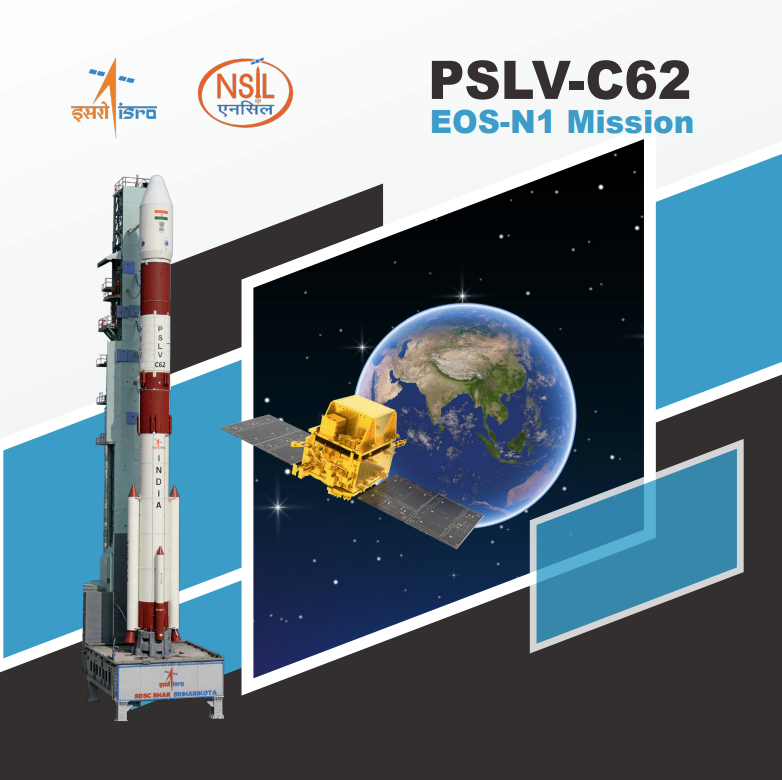
The Indian Space Research Organisation ISRO is scheduled to launch the PSLV C62 EOS N1 mission today on January 12, 2026 using its trusted Polar Satellite Launch Vehicle DL rocket. This mission is designated as the first space flight of 2026 and will be launched from the Satish Dhawan Space Centre in Sriharikota, Andhra Pradesh. The primary objective of the mission is to place the Earth observation satellite EOS N1 into orbit. The mission is being conducted under NewSpace India Limited for both national and commercial purposes.
EOS N1 Anvesha Satellite to Enhance Earth Observation Capabilities
The main payload of the PSLV C62 mission is the EOS N1 satellite, also known as Anvesha. It is a hyperspectral Earth observation satellite developed by the Defence Research and Development Organisation. The satellite has been designed with high resolution imaging capabilities to support land monitoring, agricultural assessment, environmental observation, and defence related surveillance. The hyperspectral sensors onboard Anvesha can capture data across multiple spectral bands, providing far more detailed information compared to conventional imaging systems.
Strategic and Defence Significance of the Mission
The primary objective of the EOS N1 satellite is to strengthen India’s defence surveillance capabilities. According to various reports, the satellite will enable monitoring and analysis of activities in border regions. It is expected to provide real time information that can support strategic planning and decision making processes. In addition to defence applications, the satellite will also deliver valuable data for environmental monitoring, disaster management, and other civilian uses, highlighting its multi purpose role.
Technical Configuration of the PSLV C62 Rocket
The PSLV C62 rocket is one of ISRO’s most reliable launch vehicles, specifically designed to place Earth observation satellites into Sun Synchronous Orbit. In the PSLV DL configuration, it is a four stage rocket that uses a combination of solid and liquid propulsion systems. The vehicle is equipped with two solid strap on boosters that provide additional thrust during launch. This technical configuration has been successfully used in numerous missions over the past decade, making PSLV C62 another example of ISRO’s proven launch capability.
Co Passenger Satellites and International Participation
Along with the primary satellite, the PSLV C62 EOS N1 mission will also carry between 15 and 18 small co passenger satellites. These include CubeSats and other small satellites developed by Indian startups and international partners. Some of these co passenger satellites are equipped with advanced artificial intelligence based imaging payloads. As part of NSIL’s commercial program, the mission will provide launch services to multiple domestic and global customers, reinforcing India’s position in the international space launch market.
Launch Preparations and Schedule
ISRO and NSIL have confirmed that the integration of the PSLV C62 rocket and all payloads has been completed. Pre launch checks and technical evaluations are currently underway. The mission is scheduled for liftoff on January 12, 2026 at approximately 10:17 AM IST from the First Launch Pad at Sriharikota. With this launch, ISRO will formally begin its space activities for 2026, further demonstrating the technical reliability and operational excellence of the PSLV program.
Global and Scientific Importance of the Mission
The PSLV C62 EOS N1 mission reflects India’s continued progress in space technology and holds significant global importance. The mission is expected to strengthen national defence and environmental monitoring capabilities while also expanding international cooperation and India’s competitiveness in the global space sector. Advanced Earth observation satellites like EOS N1 are set to deliver valuable data to users worldwide, making the mission beneficial not only at the national level but also for the global scientific community.