 English


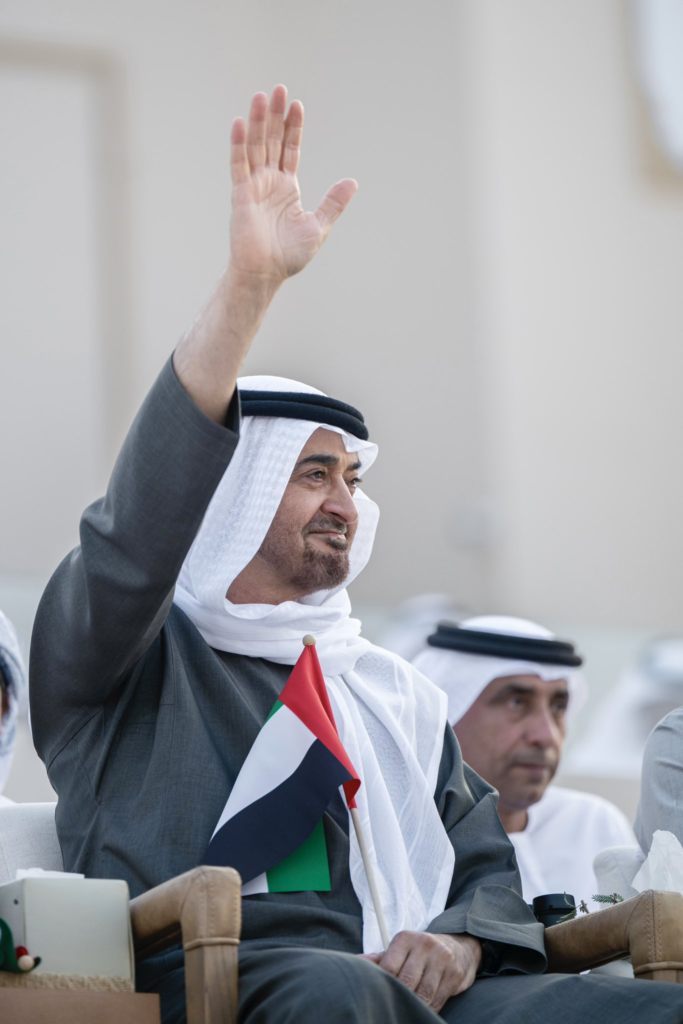
At the invitation of Prime Minister Narendra Modi, the President of the United Arab Emirates Sheikh Mohammed bin Zayed Al Nahyan is arriving in India today on an official visit. This trip is taking place at a time when diplomatic and strategic equations in West Asia are changing rapidly. Since becoming President, this is his third official visit to India, and his fifth visit in the past decade. The visit is being seen as the next step in the deepening strategic partnership between India and the United Arab Emirates. The meeting between Prime Minister Modi and the UAE President is expected to cover wide ranging discussions on trade, investment, energy security, defense cooperation, and global issues. In government and diplomatic circles, the visit is being viewed not merely as a ceremonial engagement, but as an important signal amid shifting global balances.
Background of Past Visits and Growing Trust
India UAE relations have gained strong momentum over the past few years. The continuity of high level visits has strengthened mutual trust between the two countries. In September 2024, Abu Dhabi Crown Prince Sheikh Khaled bin Mohamed bin Zayed visited India, while in April 2025, Dubai Crown Prince and UAE Defense Minister Sheikh Hamdan bin Mohammed bin Rashid Al Maktoum also traveled to India. From India’s side, External Affairs Minister S Jaishankar visited Abu Dhabi in December 2025, where he co chaired the 16th India UAE Joint Commission Meeting and the fifth Strategic Dialogue. Prime Minister Modi himself visited the UAE multiple times during late 2023 and 2024, including the landmark February 2024 visit when he inaugurated the BAPS Hindu Mandir in Abu Dhabi. The two leaders also met in June 2024 on the sidelines of the G7 Summit. These frequent interactions clearly indicate that India UAE ties have moved well beyond formal diplomacy.
Economic and Strategic Pillars of India UAE Relations
The relationship between India and the UAE rests on political understanding, cultural linkages, and strong economic cooperation. The UAE is among India’s leading trade and investment partners. Agreements such as the Comprehensive Economic Partnership Agreement, the local currency settlement mechanism, and the bilateral investment treaty have given fresh momentum to trade relations. In the energy sector, the UAE plays a critical role in supporting India’s energy security. From crude oil and gas supplies to participation in India’s strategic petroleum reserves, long term cooperation between the two sides is firmly in place. During this visit, progress on these initiatives is expected to be reviewed, along with discussions on exploring new areas of cooperation. Defense and security cooperation is also likely to feature prominently, especially issues related to maritime security and supply chain stability.
Changing Gulf Politics and the Pakistan Saudi Factor
The UAE President’s visit is happening at a time when new alignments appear to be emerging in the Gulf region. On one side, Saudi Arabia’s recent outreach toward Pakistan has drawn attention, while on the other, the UAE has prioritized a progressive partnership with India focused on economic growth and modernization. Saudi Arabia is attempting to recalibrate its security posture amid rising tensions with Iran, with Pakistan’s military capabilities seen as one factor in this strategy. The UAE’s approach, however, appears different. It views India as a stable economy, a vast market, and a reliable long term partner for investment. Diplomatic observers note that for the UAE, strengthening ties with India is not just an economic choice, but a strategic investment in stability. This visit further underlines the message that friendship with India is increasingly being seen as a balancing force in regional geopolitics.
Global Signals From the Modi MBZ Meeting
The meeting between Prime Minister Modi and Sheikh Mohammed bin Zayed is not expected to be limited to bilateral issues alone. The convergence of views on regional and global matters makes this engagement particularly significant. Amid rising tensions in the Red Sea and the Strait of Hormuz, the UAE’s role in ensuring India’s energy security has become even more crucial. Initiatives such as the India Middle East Europe Corridor may also come up for discussion, as they hold the potential to open new routes for trade and regional connectivity. With signs of growing instability in parts of the Gulf, the UAE’s closer engagement with India signals a future oriented partnership based on economic strength and resilience. When Sheikh Mohammed bin Zayed sets foot on Indian soil, it will not merely mark a state visit, but will also stand as a symbol of India’s rising global stature and the evolving dynamics of the Middle East.