 English


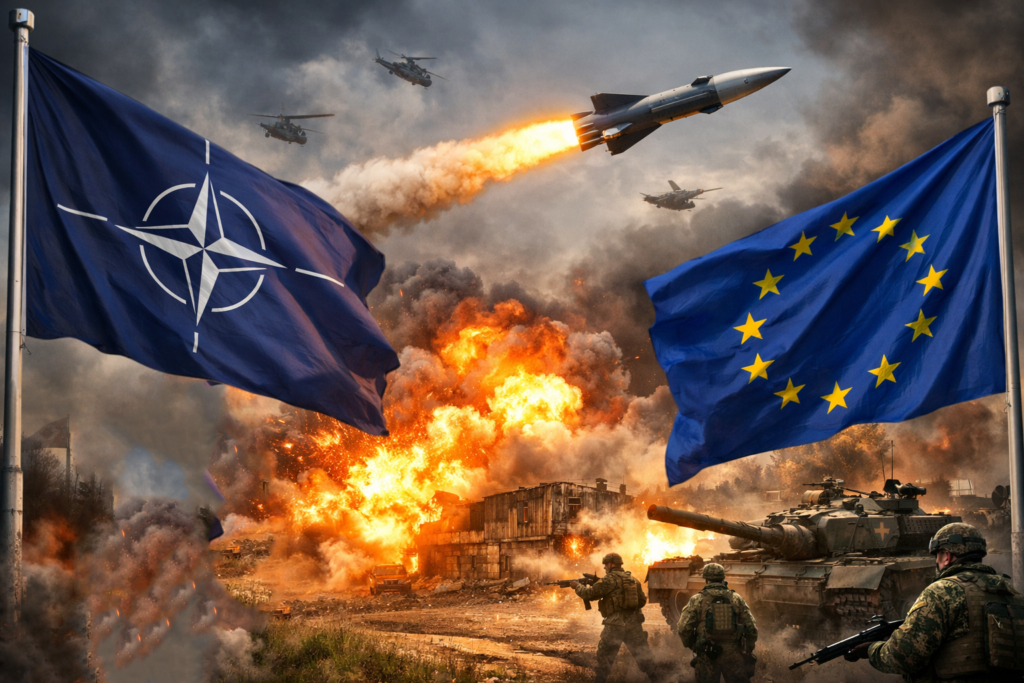
Russia carried out a hypersonic missile strike on targets in western Ukraine on friday, using an Oreshnik hypersonic missile aimed at locations in the Lviv region near the border with NATO member Poland. This marked only the second recorded use of this missile system. The missile is capable of carrying nuclear warheads, although in this strike it was reportedly deployed with a conventional warhead against what was described as a ground-based industrial facility. The Russian Defence Ministry stated that the strike was conducted in retaliation for an alleged Ukrainian drone attack on President Vladimir Putin’s residence in December, a claim that was rejected by both Ukraine and the United States.
During overnight air and missile attacks, Russian forces also deployed multiple other missiles and drones, several of which disrupted electricity, heating, and water supplies across Ukraine, including in the capital Kyiv. Power outages were reported in multiple districts of Kyiv, and damage was also reported at the Qatari embassy.
Impact of the Attacks and Civilian Harm
At least four civilians were killed in the Russian strikes, with several others injured, particularly in Kyiv where disruptions to heating and water supply affected hundreds of residential buildings. The missile strike on the state-owned workshop facility in Lviv caused limited structural damage, including cracks in concrete structures and surface craters. The Russian Defence Ministry described the site as part of Ukraine’s military-industrial complex, while Ukrainian authorities stated that the facility was used for equipment and infrastructure purposes.
The range and speed of the Oreshnik missile heightened concern among European partners, with the strike viewed as a significant escalation that increased security anxieties across Europe and NATO. The European Union and its member states treated the attack as a serious development and accelerated discussions on tougher sanctions against Russia and expanded assistance measures for Ukraine.
International Reaction and NATO-Related Tensions
The strike intensified tensions within NATO and across European countries, as the missile targeted western Ukrainian regions close to European Union and NATO-supported areas. European leaders characterized the action as a turning point and called for stricter sanctions against Russia along with enhanced military support for Ukraine. Several European and NATO officials warned that the use of such missile systems posed risks to broader European security, prompting regional actors to consider immediate response and support measures.
Ukrainian defence officials described the strike as part of a wider Russian offensive involving dozens of missiles and hundreds of drones launched overnight, causing serious disruption to municipal services and civilian infrastructure, particularly electricity and heating networks in Kyiv and Lviv. Ukrainian authorities stated that the attacks caused widespread damage and significantly affected daily life.
Russia’s Claims and Rejection by Ukraine and the United States
The Russian Defence Ministry framed the strike as retaliation for an alleged Ukrainian drone attack on President Putin’s residence days earlier. Ukraine denied carrying out any such attack, and the United States also dismissed the claim. According to published reports, Western governments and allied partners stated that Russia’s narrative contradicted available evidence and that the strike appeared intended to exert pressure within the broader conflict.
Ukrainian officials and Western allies called for meetings of the United Nations Security Council and NATO to accelerate a coordinated international response and address the use of advanced missile systems under existing security frameworks and international law. Ukraine’s foreign minister described the deployment of the Oreshnik missile as a serious security threat and urged immediate international action.