 English


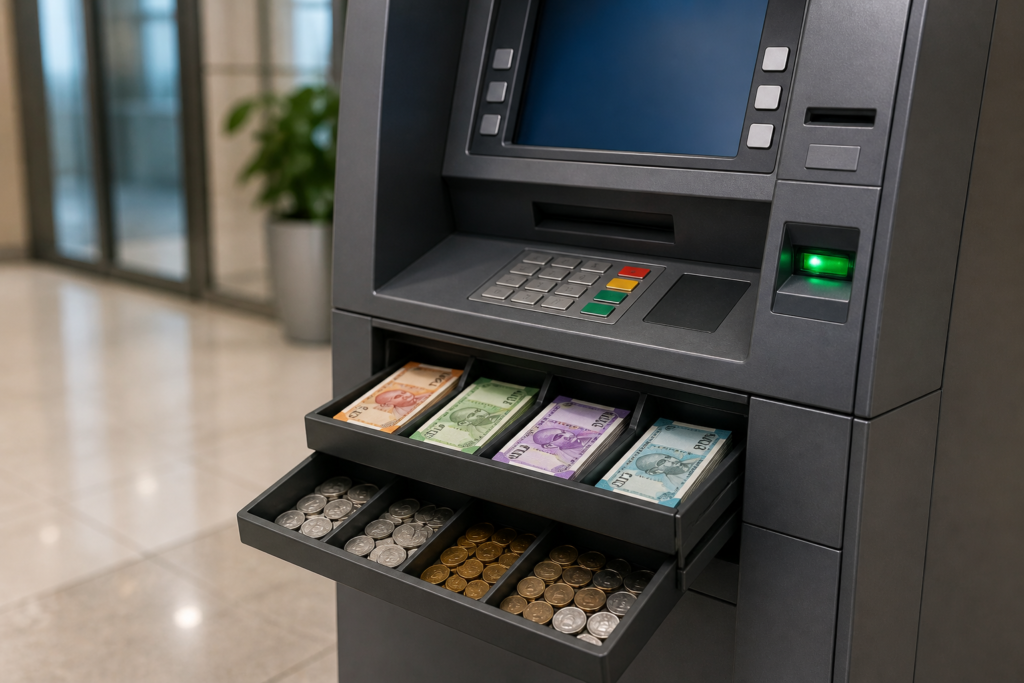
In India, the shortage of small denomination notes and coins has long been a major issue in everyday transactions. In markets, bus stands, railway stations, and among small shopkeepers, transactions are often affected due to the lack of ₹10, ₹20, and ₹50 notes. To address this problem, the banking sector is now moving in a new direction.
According to recent information, the State Bank of India (SBI) is working on a plan to install special machines to provide small denomination notes and coins. These machines are being referred to as Small Value Dispensing Machines (SVDM). Their objective is to make change easily available to people.
According to documents released by SBI, these machines will be able to dispense coins of ₹1, ₹2, ₹5, and ₹10, as well as notes of ₹10, ₹20, and ₹50. A key feature is that these machines will be different from traditional ATMs, and users will be able to withdraw money by scanning a UPI-based QR code.
Under this plan, around 60 machines are expected to be installed in the initial phase, which may be set up in major cities and crowded locations.
The government and the banking system are also working in this direction. Reports suggest that pilot projects are underway to address the shortage of small notes, and in the future, these machines may be deployed across the country on a large scale.
Another possible model of these machines could be a “hybrid ATM,” where users can deposit larger notes and withdraw smaller notes and coins. This would especially benefit those who need change on a daily basis.
Overall, this initiative by SBI is being seen as an important step toward creating a better balance between digital and physical cash systems. If the plan proves successful, the problem of small change could be significantly reduced in the coming time.